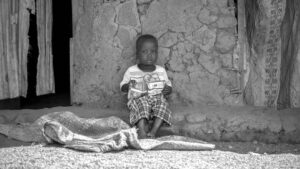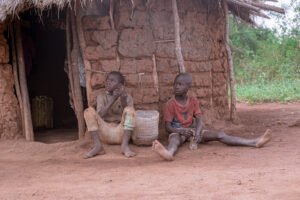
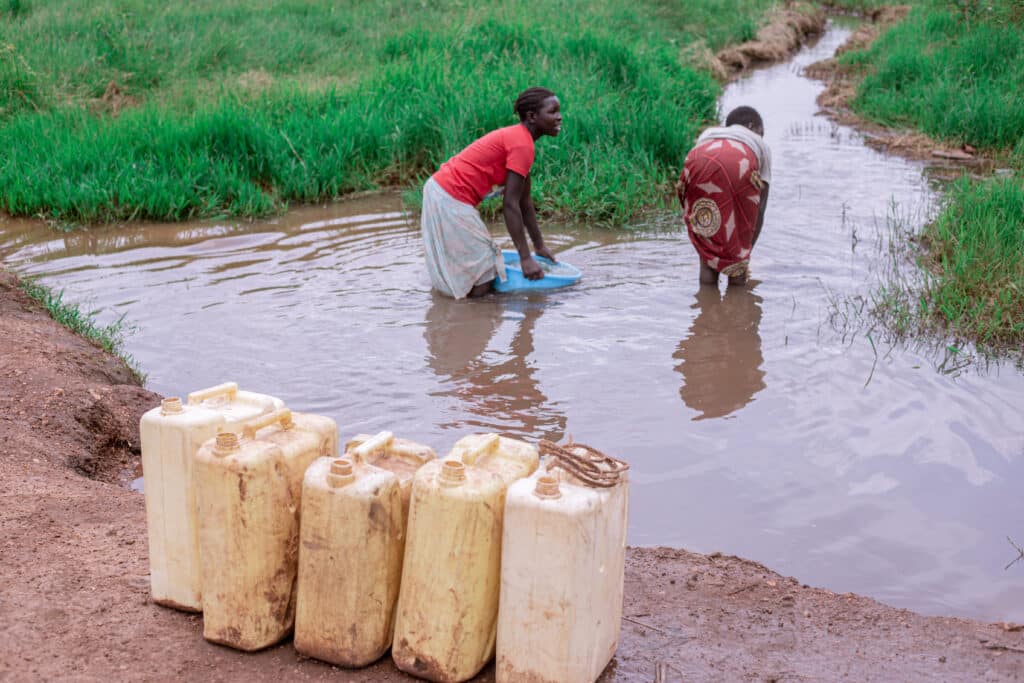
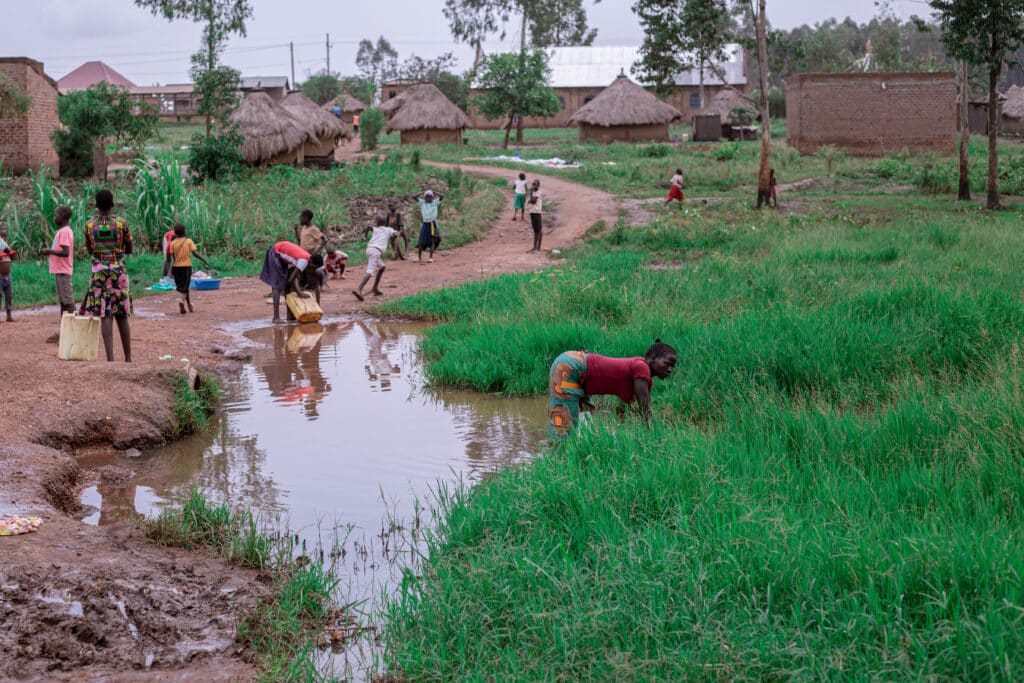
Life in Rwekinye, in Kiryandongo District, is marked by visible hardship and daily struggle. Many families live in small, fragile houses made of mud and old iron sheets. Access to basic services is limited, and poverty affects nearly every aspect of life. The community depends largely on subsistence farming, yet unpredictable weather and limited resources make it difficult to produce enough food. As a result, many households survive from hand to mouth.
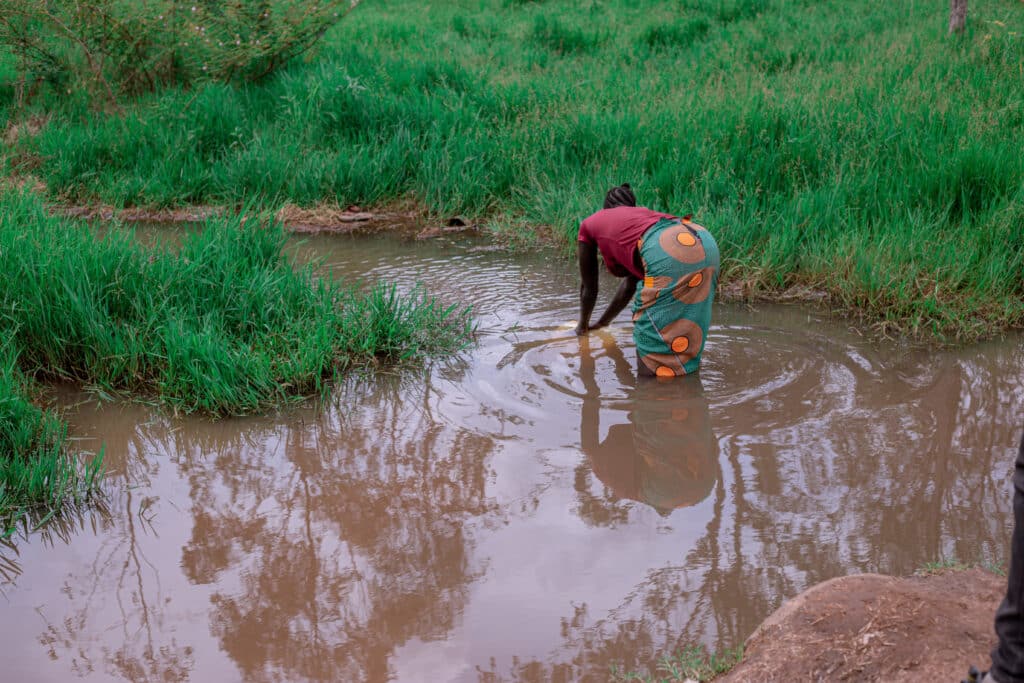
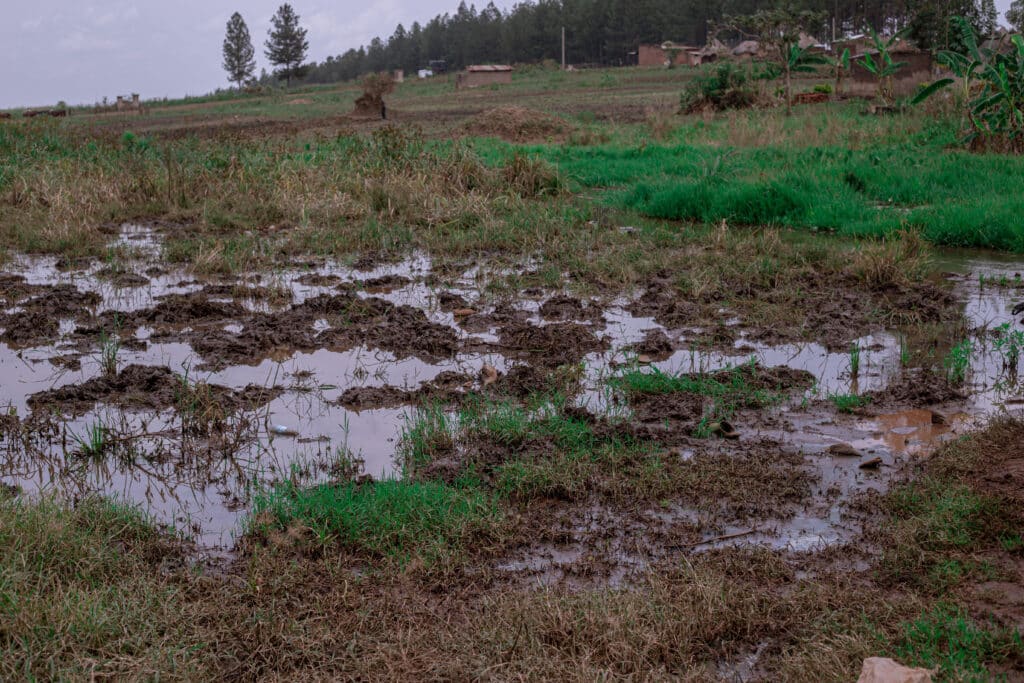
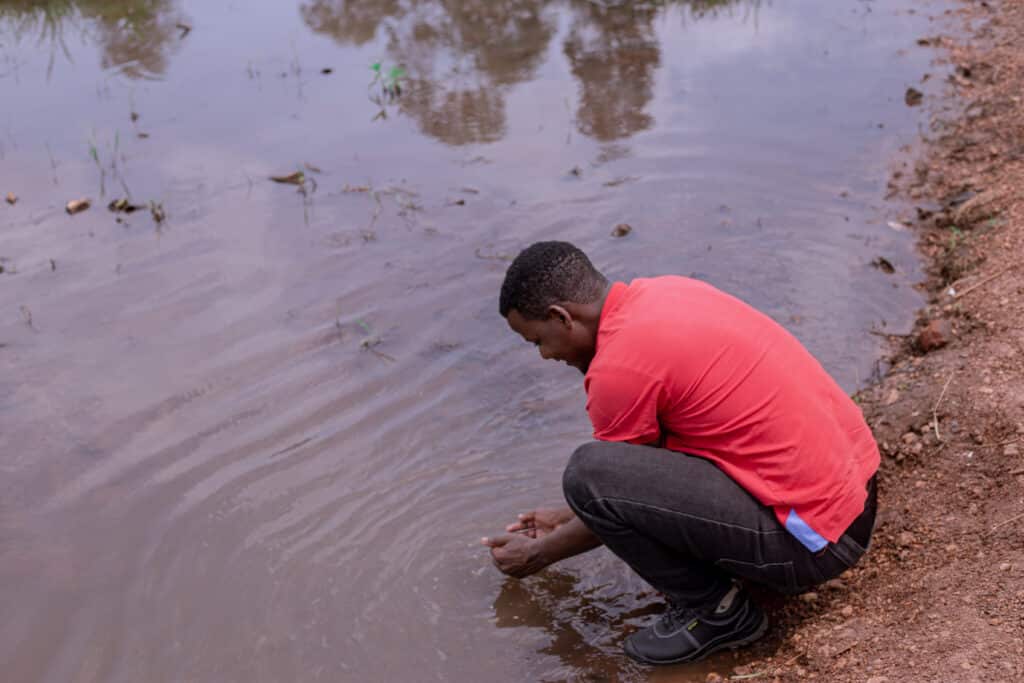
One of the most serious challenges in Rwekinye is access to clean and safe water. Many residents fetch water from open wells, swamps, small ponds, and shallow boreholes that are not properly protected. During the dry season, water sources shrink and become even more contaminated. In the rainy season, runoff water carries dirt, animal waste, and other impurities into these same sources, making the water appear brown and unsafe for consumption.
Because of using untreated and contaminated water, the community faces frequent outbreaks of waterborne diseases. Illnesses such as cholera, typhoid, and dysentery are common in areas where clean water is scarce. Children are especially vulnerable, often suffering from diarrhea, which can quickly lead to dehydration and weakness. Skin infections and stomach complications are also widespread due to bathing and washing in polluted water.
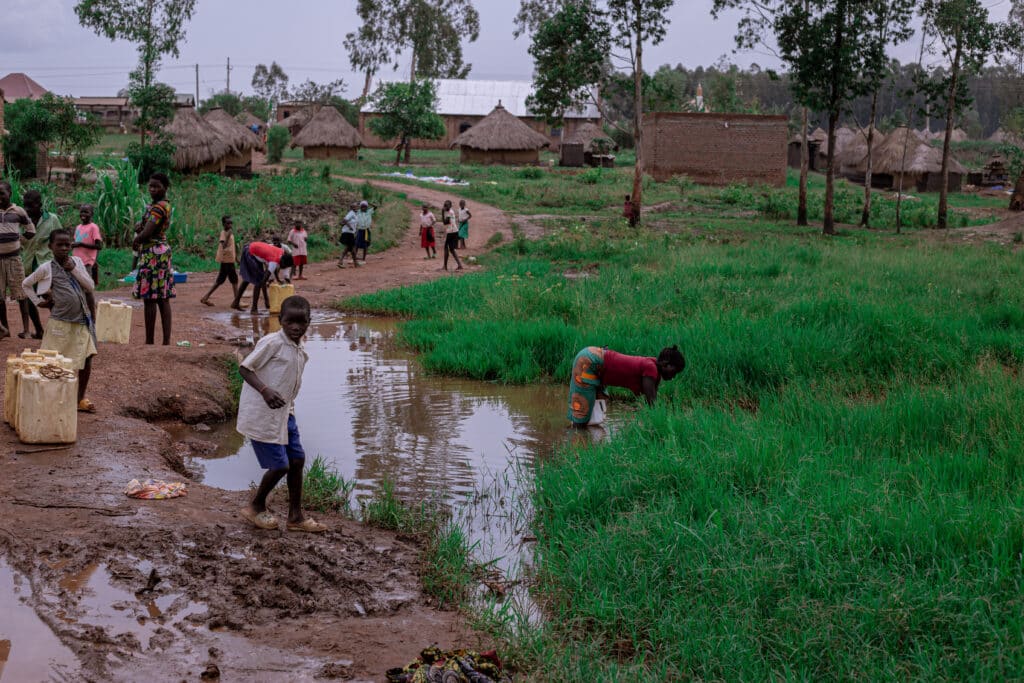
Women and children bear the greatest burden of water scarcity. They walk long distances carrying heavy jerrycans under the hot sun, sometimes spending hours each day just to collect water. This limits children’s time for school and exposes women to exhaustion and health complications. The physical strain and lost opportunities continue the cycle of poverty in the area.
Improving access to clean water in Rwekinye would greatly transform the lives of the people in Kiryandongo District. Protected boreholes, water purification education, and proper sanitation facilities would reduce disease, improve school attendance, and restore dignity to many families. Safe water is not just a basic need; it is a foundation for healthier and more hopeful communities.
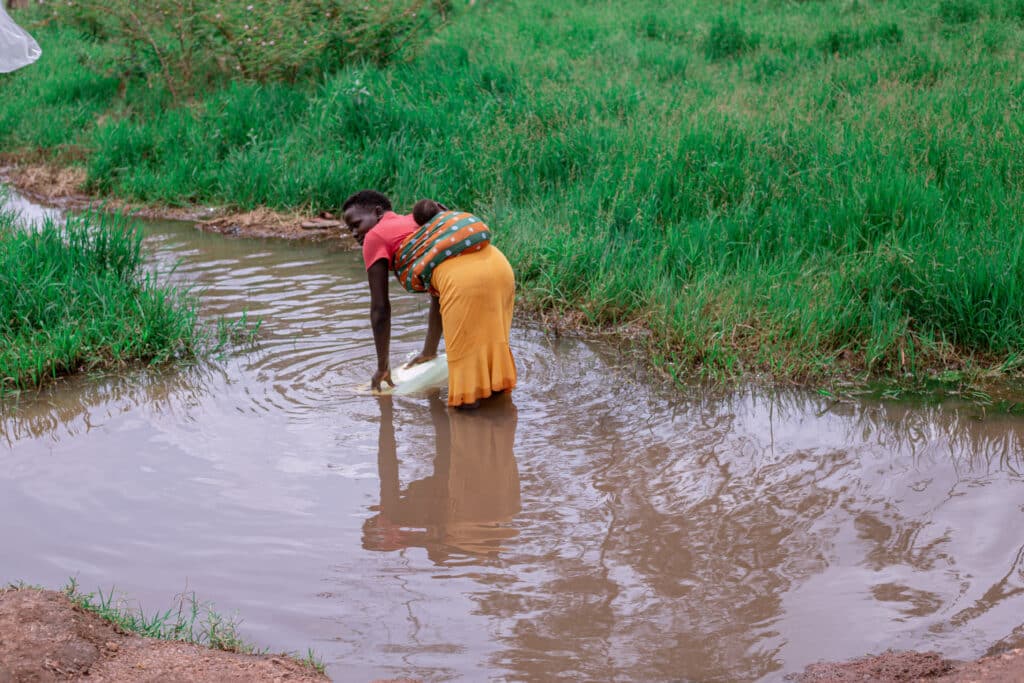
A woman carrying a baby at he back while collecting water from the pond.
About Author