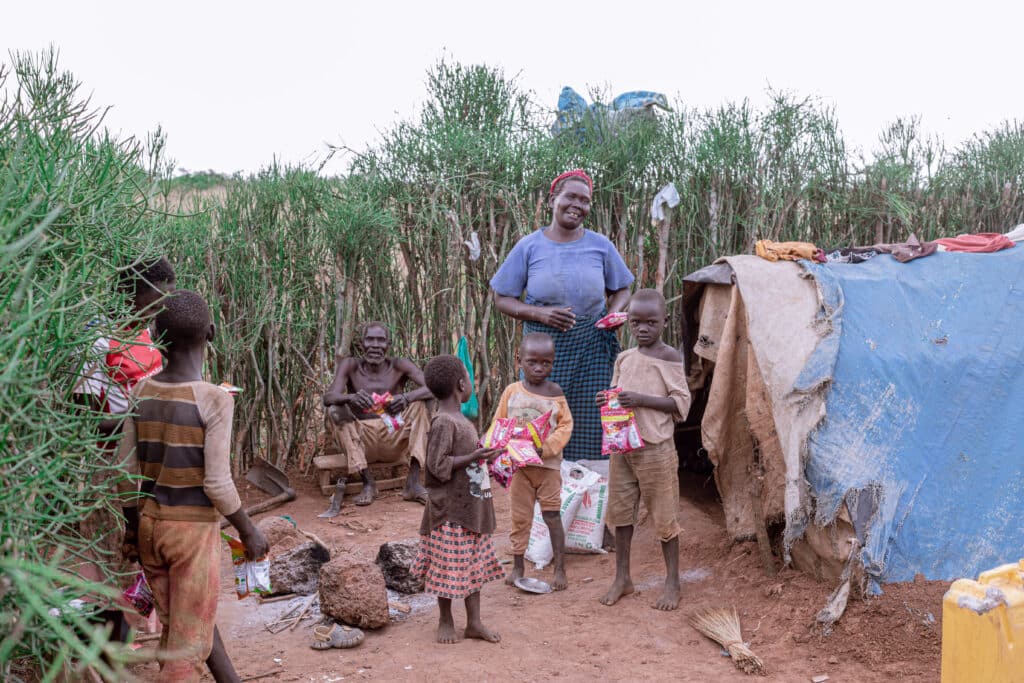
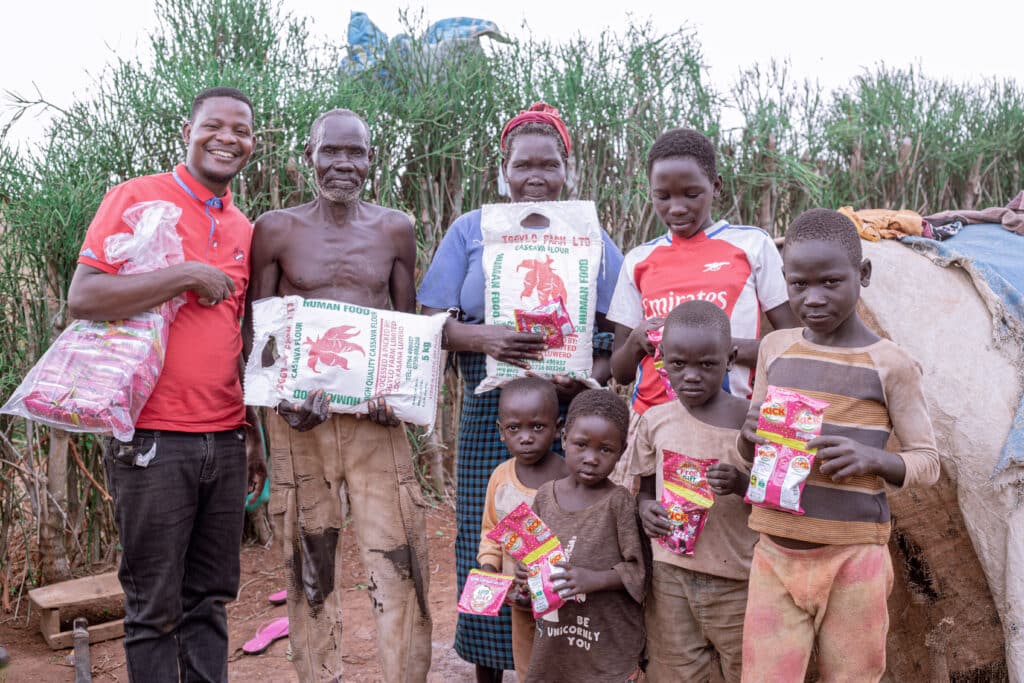
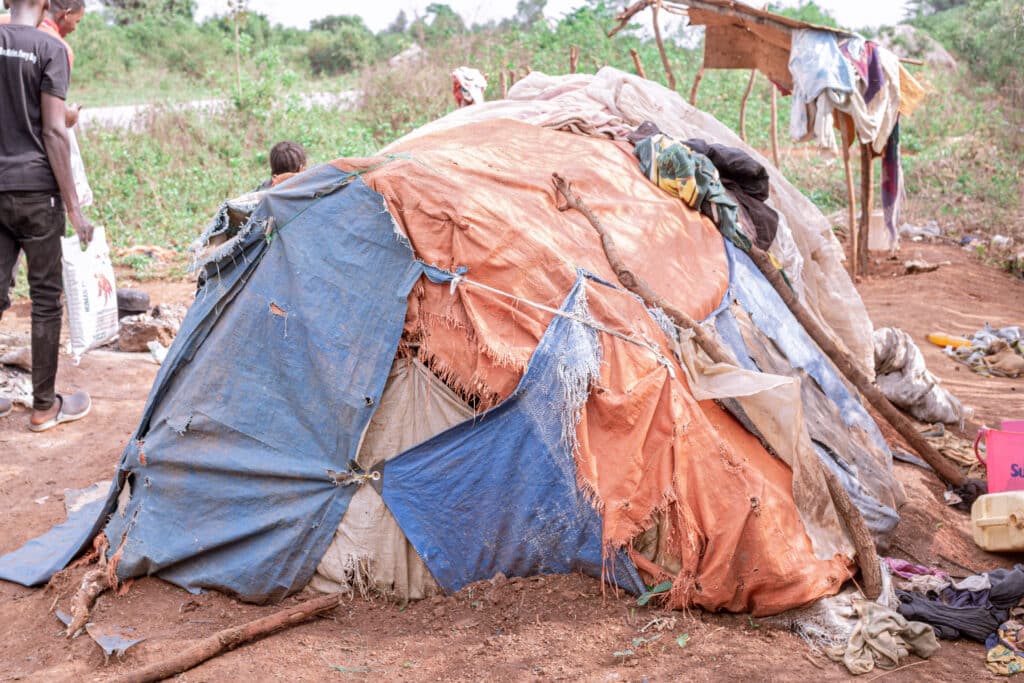
In the quiet village of Wakasanyi in Kiryandongo District, we met a man named Elweru, aged seventy-six, living in conditions that are difficult to describe without deep emotion. He lives in a small worn-out tent with his dear wife Hannah and their five children. The tent, thin and fragile, stands as their only shelter against the burning sun and heavy rains. It is not a temporary camping site—it is their home.
When we first encountered this family, Elweru was lying inside the tent resting. His body looked tired and worn by many years of hard labor. As he lay there, one could sense he was not simply resting; perhaps his mind was burdened with thoughts about what his family would eat that day. At his age, rest should be a reward of a lifetime of work, yet for him it seemed like a pause between struggles.
Outside the tent sat Hannah, his faithful wife. She was quietly watching the sky, as if searching for hope beyond the clouds. Her face carried patience mixed with silent worry. A mother’s heart always thinks ahead—about the next meal, the safety of her children, and the uncertainty of tomorrow.
Nearby, the five children were moulding mud and playing in the dirt. What looked like a simple game was also a reflection of their environment. With no toys and no proper space, mud had become their source of entertainment. Their laughter echoed faintly, innocent yet surrounded by hardship.
I have seen many struggling families before, but Elweru’s situation felt different. This was not just poverty—it was daily survival. The thin tent, the tired father, the watchful mother, and the children playing in mud painted a picture of a family carrying a heavy load every single day.
At seventy-six years old, Elweru’s work is removing tree stumps from people’s gardens. It is demanding and exhausting labor even for young men. Watching an elderly man bend, dig, and strain his body to uproot stubborn stumps is heartbreaking. His age alone should exempt him from such tasks, yet necessity pushes him beyond his limits.
Earlier todday, we had been distributing food, preaching to hopeless souls and clothes to the wider community of Wakasanyi. Many families were blessed, and joy filled the air as people received support. After completing the distribution, we began our journey back, believing the day’s work was done.
But deep within my spirit, I felt a strong urge to spare some food before leaving. It was not part of the original plan, yet the prompting was clear. I decided to set aside a portion of food and carry it along with me on the way back.
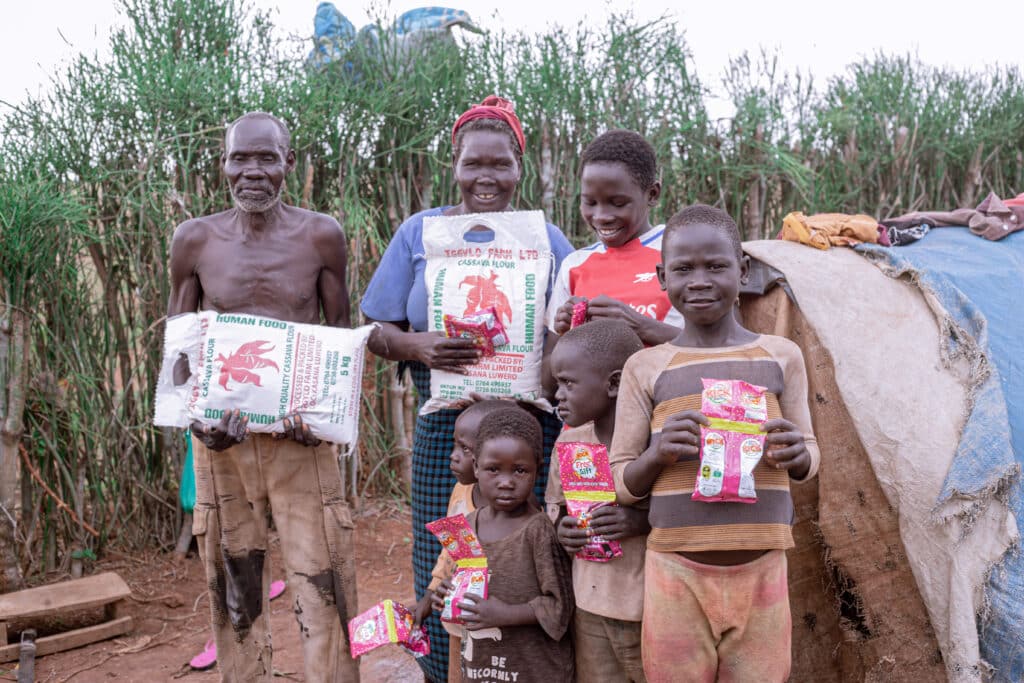
When we reached Elweru’s tent and handed the food to the family, something changed in the atmosphere. The tired man slowly rose, Hannah’s eyes brightened, and the children paused from their mud play. What seemed small to us became a great treasure to them. It was a timely answer to unspoken worries. We had already gave out blankets as well but this family deserved seven of them. Luckily i picked cash worthy 50,000ugx and handed over to the wife hopefully they use it of other family needs.
That moment reminded me that sometimes the greatest blessings come from simple obedience and compassion. The food we spared on our way back turned into a miracle for Elweru’s household. In the middle of daily struggle, hope knocked at their tent, proving that even in the hardest places, kindness can become a lifeline.
We can’t thank you enough, our dear faithful partners. This is because you are obedient; nothing would have been completed without your love through giving.
About Author